Tuesday, November 9, 2010

Some More Film Noir Notes


The Naked City
1948-Jules Dassin
Fantastic police procedural only slightly marred by the unnecessary voice-over narration. Two sturdy detectives track a murderer, following up leads and meeting all sorts of interesting types, before the exciting finale on the Brooklyn Bridge.
Notable especially for all the great on-location shots of NYC.

Black Angel
1946
Based on the novel by Cornell Woolrich; a superior noir. June Vincent’s estranged husband has been accused of murder. With the help of the awesome Dan Duryea as the victim’s hopelessly alcoholic songwriter husband, she sets out to find the real killer.
Also with Peter Lorre as the inevitable sleazy nightclub owner. Surprising ending. Solid movie.

The Lady from Shanghai
1948-Orson Welles
Welles is a tough-guy sailor, hired by the seductive Rita Hayworth to work on her husband’s yacht. Intrigue, suspicion, and murder follow. The scene in the hall of mirrors, toward the end, is masterful.

The Big Clock
1948
A great cast in a top-notch noir. Ray Milland is a magazine publisher who misses a vacation with his wife and winds up spending time with another woman—a woman who winds up murdered, and all the clues point to Milland as the killer.
Also starring Charles Laughton and the beautiful Maureen O’Sullivan.

Niagara
1952-Henry Hathaway
A young couple on a delayed honeymoon to Niagara Falls meets another couple whose marriage is falling apart: Marilyn Monroe is the evil vixen, Joseph Cotton is her shell-shocked war vet husband. With her lover, Monroe plots to murder her husband; the husband’s making plots of his own, and the young couple gets involved against their wills. Joseph Cotton is great in this one, and Monroe shows that she could actually act when given half the chance.

Wednesday, October 27, 2010

More random Notes on Film Noir


Odds Against Tomorrow
1959-Robert Wise
Ed Begley is an ex-cop who has a plan for the perfect score. Harry Belafonte is a musician who owes a huge gambling debt. Robert Ryan is the career criminal whose unreasoning hatred of black people will ultimately destroy him and everyone around him. Odds Against Tomorrow is a beautifully filmed, high tension morality play that manages to be gritty and entertaining while maintaining a deeper relevance. Highly recommended.

Woman in the Window
1944-Fritz Lang
Edward G. Robinson is a stolid professor who finds himself involved with a beautiful artist’s model, played by Joan Bennett. When her jealous lover shows up, Robinson is forced to kill him in self-defense. Covering up the crime is made all the harder when Robinson’s D.A. friend is assigned to find the killers, and the victim’s sleazy bodyguard shows up to blackmail the inept pair.
Robinson is great as always. Bennett is gorgeous. And Dan Durya, as usual, steals every scene he’s in as the sleazy bodyguard. But the last three minutes are annoying—they go for a total cop-out ending.
Aside from that: Solid.
The Stranger
1946-Orson Welles
Edward G. Robinson is a Nazi hunter on the trail of escaped Nazi war criminal Orson Welles, who’s taken up refuge as a respected citizen in a small New England town.
Welles acting and directing are top-notch with this one. Robinson turns in a surprising performance, and even Loretta Young (who I never much cared for) is very convincing as Welles new wife, teetering on the brink of a nervous breakdown.

On Dangerous Ground
1951-Nicholas Ray
Robert Ryan is a hardened city cop, but the ugliness of the job is getting to him, until he’s sent to the country to help investigate a murder. On the killer’s trail, he meets the bitter father of the murder victim and the killer’s blind sister, played by Ida Lupino, and re-discovers his lost humanity in the process.
Ryan is great as the brutal and disillusioned detective, unable to understand or communicate his seething emotions.

They Live By Night
1949-Nicholas Ray
After escaping from prison and meeting a girl (played by Cathy O’Donnell), Farley Granger wants nothing except to go straight and lead a decent life. But this is noir: that ain’t gonna happen. His escapee cohorts turn up and force him into another heist; disaster ensues.
Killer’s Kiss
1955-Stanley Kubrick
Kubrick’s second movie, very low budget but still showing some signs of his genius. A second-rate boxer and the woman he saved from being raped want to start a new life together away from the cesspool of the city, but her former boss has other ideas. A great chase scene over the rooftops of the city toward the end.

I Wake Up Screaming
1941-H. Bruce Humberstone
Entertainment promoter Victor Mature is accused of murdering his young protégé, played by Carole Landis, and with Betty Grable’s help he struggles to stay ahead of the cops and find the real killer.

Monday, October 25, 2010

The cover


The cover of The Bastard Hand, you know, sans title and all that stuff. It was put together by graphic artist extraordinare Ron Warren.

Sunday, October 24, 2010

The Bastard Hand update

Just talked to the illustrious Jon Bassoff of New Pulp Press... Advance reading copies are coming in November, official release date is now March 20... mark your calenders for a book that is "violent, offensive, over-the-top, and occasionally brilliant".

Saturday, October 23, 2010

Random Notes about Random Films Noir


The Dark Corner
1946-Henry Hathaway
Complex and beautifully-shot noir starring Mark Stevens as a P.I. accused of murder—he goes on the lam to find the real killer, and crosses paths with William Bendix as a mysterious white-suited lug who keeps following him, and a shady art dealer played with usual skill by Clifton Webb. Lucille Ball is Stevens plucky secretary.

Criss Cross
1948-Robert Siodmark
Because he can’t keep away from Yvonne DeCarlo, Burt Lancaster (as an armored car driver) is forced into helping pull off a heist by DeCarlo’s gangster beau, played by the one of a kind Dan Duryea. Superior noir with a surprisingly bleak ending.

Dead Reckoning
1947-John Cromwell
Humphrey Bogart is a hard-nosed war vet who storms into a small Southern town to find out what happened to his buddy, who’s disappeared. Terrific tension and suspense. One of Bogie’s better performances, and Lizabeth Scott is also in good form.
D.O.A.
1949
Edmond O’Brien is victimized with a slow-working poison, and frantically races to find out who killed him and why before time runs out. A clever premise with lots of great twists and almost unbearable suspense. Superior.

The Hitch-hiker
1953-Ida Lupino
Edmond O’Brien and his buddy head off for a vacation, but things go bad when they pick up a psychotic hitch-hiker with a creepy right eye. Taut suspense; Ida Lupino was the only female director of noir and suspense in her day, and she proves that she’s just as good behind the camera as in front of it, maybe even better.

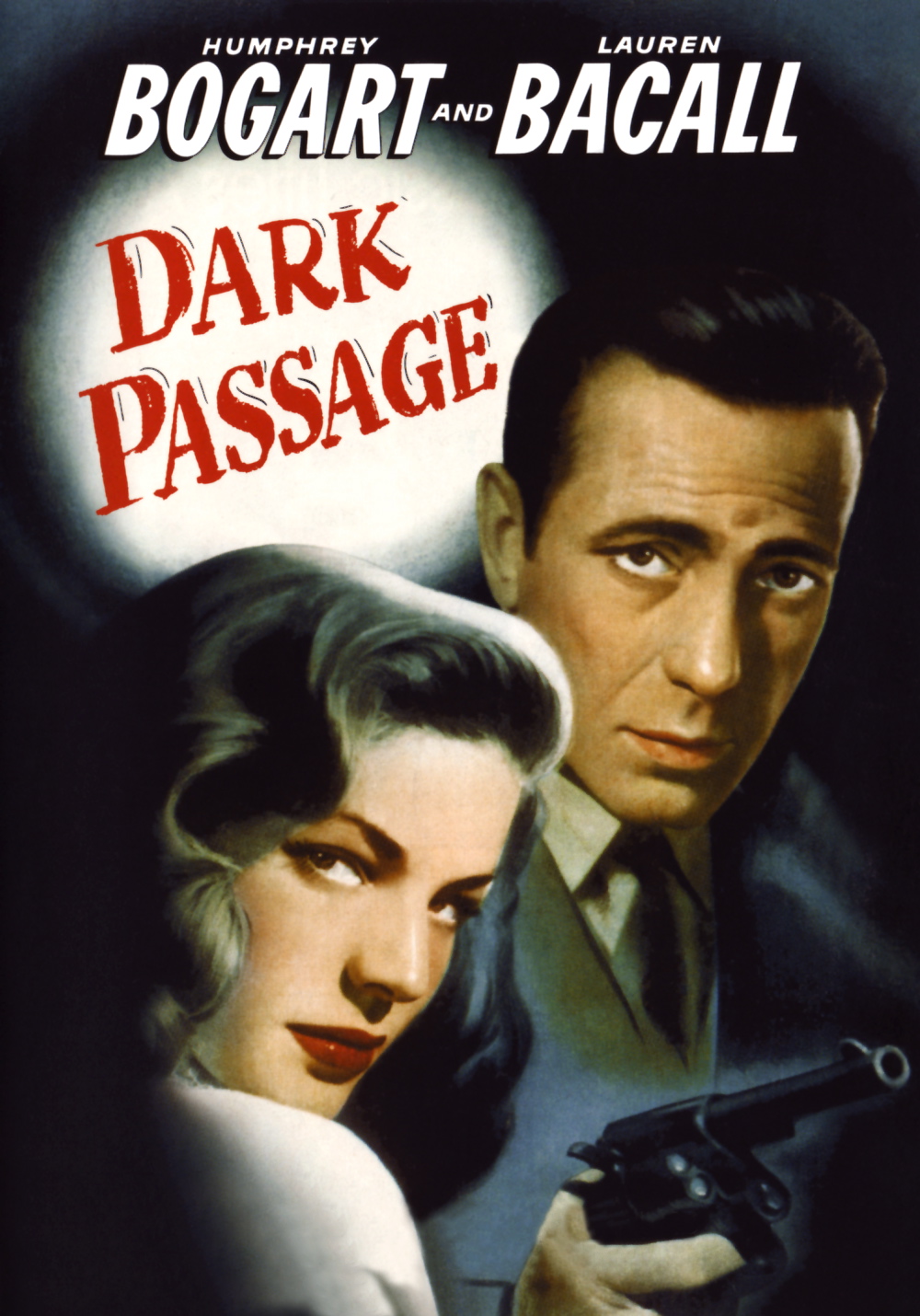
Dark Passage
1947-Delmer Daves
Based on the novel by David Goodis. Bogie is an escapee from the pen set on finding the real killer of his wife. After plastic surgery, he’s aided by a sultry Lauren Bacall. Not a great movie, but every scene between Bogart and Bacall smolders.

Detour
1946-Edgar G. Ulmer
Low-budget and bleak noir classic. Tom Neal accidently kills the guy who gave him a lift, and then sets off on a whirlwind disaster of bad choices and bad luck—especially when he picks up vicious dame Ann Savage, who knows what he did and isn’t afraid to use it against him.
More to come, sooner or later…